
Randolph County 72-Hour Release Status
The Randolph County Sheriff does not publish a verified rolling 72-hour release list. The official Current Inmate Listing opens an embedded roster of people displayed as being in custody at its stated update. It has no released-status tab, historical archive, or three-day date filter. Searches that surface released tabs for other Randolph counties cannot be applied to Randolph County, Illinois.
A three-day review therefore starts with a negative fact, not a substitute feed. The online roster cannot identify everyone who left across the period. It also cannot say whether an absent person went home, entered state prison, remained under United States Marshals authority, or moved to another agency. The requested jail record and receiving system resolve those outcomes.
Review Randolph County Three-Day Releases
A useful 72-hour review is organized by custody episode, not by the moment someone notices a missing name. Record the beginning and end of the period, preserve each system’s timestamp, and use the same identifiers throughout. A name alone can match the wrong person or the wrong state.
- Check the official Randolph County current roster and save its update time. A current match shows only that the person appeared in custody at that update.
- Search the Randolph Circuit Clerk case route for orders entered during the three-day period. Note the case number and the exact wording of each event.
- Ask the jail about recent movement at 618-826-5484. Staff may restrict telephone details, so use the call to identify the correct records path.
- Request release or transfer entries for each known booking episode. Include full name, identifying date of birth, case or booking number, and approximate dates when available.
- Reconcile the result with IDOC, VINE, or federal records if the county record reports a transfer or continued custody.
The narrower Randolph County 24-Hour Release List focuses on a same-day movement and pickup needs. A three-day audit is different. It compares several days of official events and is better suited to a weekend gap, while still refusing to treat roster absence as proof.
Randolph County 72-Hour Record Fields
A true release list would need dated movement fields for each person. Randolph’s online roster omits those fields. The table separates what can be seen now from what must be obtained through the sheriff’s release or booking record. It also shows why a screen capture cannot replace the institutional record.
| Field | Use in a three-day review | Source |
|---|---|---|
| Roster update time | Fixes the point in time represented by the current display | Current roster |
| Name, photo, charges | Helps match a current listing to the right custody episode | Current roster |
| Bond text | Shows a roster label, not a completed release event | Current roster |
| Booking or admission date | Pairs the correct entry with its later endpoint | Requested record |
| Release or transfer date and time | Places the physical movement inside or outside the 72-hour window | Requested record |
| Reason or disposition code | Distinguishes court release, time served, transfer, and other outcomes | Requested record |
| Destination or receiving agency | Shows whether another form of custody continued | Requested record |
Ask for any code key needed to read the response. The Illinois State Archives describes sheriff jail registers as including commitment information plus the date and reason for release, and sometimes personal effects. Modern fields may use other labels. If some destination detail is withheld, request the segregable release date and category rather than assuming the whole record is unavailable.
Randolph Weekend Release Reconciliation
A 72-hour period can bridge days when offices have different hours, but no reviewed Randolph source promises a special weekend or holiday publication schedule. The embedded roster carries a visible update timestamp without stating a guaranteed cadence. A court order, physical movement, and public-system update may therefore fall on separate dates.
Keep those dates separate. The judge’s order establishes legal authority. The jail’s release or transfer entry records the institutional movement. VINE or another public interface records when a downstream system received or displayed an event. A late order can be processed later, and another hold can prevent the expected exit. None of those possibilities should be replaced with one guessed “release date.”
For a multi-day review, build a short timeline for each person. Record the exact court wording, sheriff movement time, and notification time. If they differ, ask the source agency about the scope of its own field. This method catches a lawful lag without labeling it an error and prevents a Monday roster check from creating a false weekend release time.
Note: A 72-hour arrest-information rule does not create a public 72-hour released-inmate archive.
Randolph Release Searches Lose History
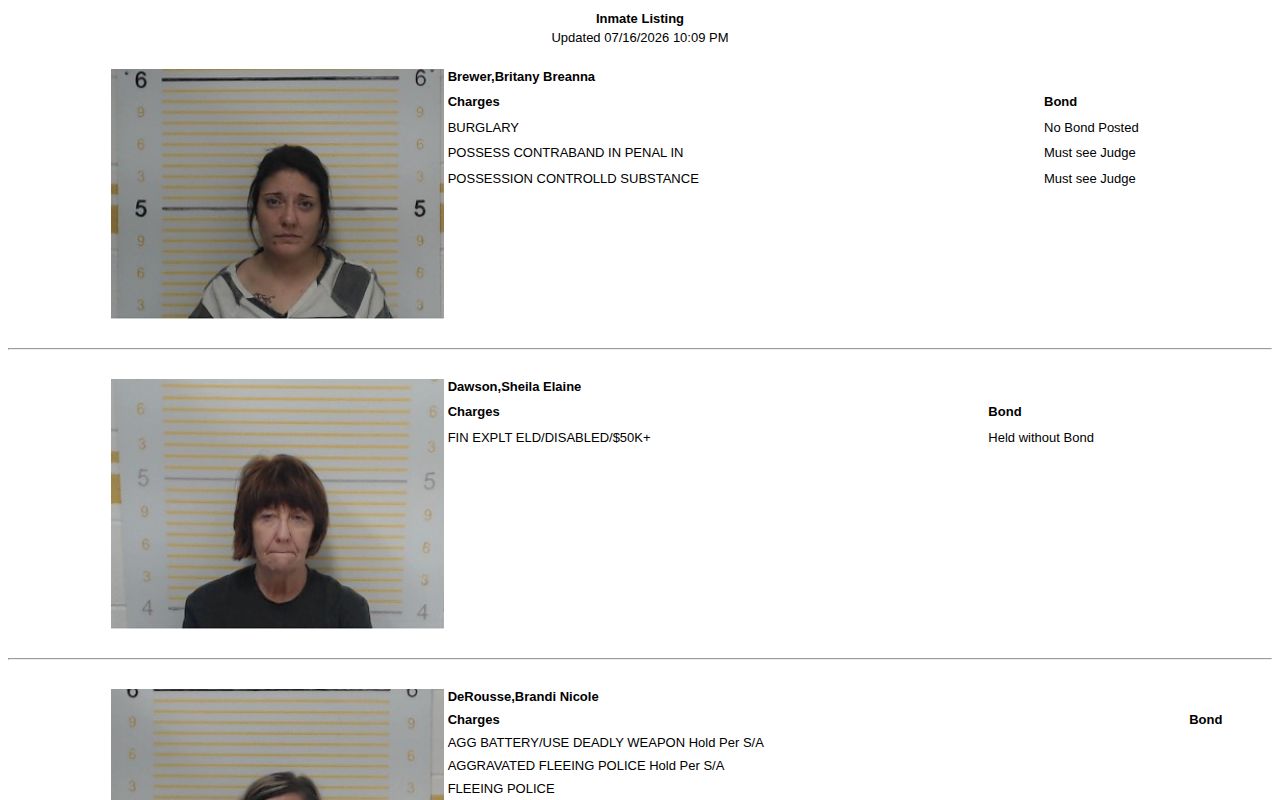
The embedded Randolph County roster demonstrates the county side of this problem. Its current-person blocks display an update time, booking photos, names, charges, and bond text. They do not display booking dates, release dates, reasons, destinations, or archive controls.
The same history gap appears in another form at the state level. IDOC says its web search returns people who are incarcerated or on parole. A person who is fully discharged may no longer appear even though public historical information can still be requested. County and state disappearance thus share one lesson: absence from an online locator needs a records fallback.
Request Randolph Three-Day Release Records
A focused Randolph County request can ask for release and transfer entries recorded within a defined three-day period. Broad list requests may require more review and may contain exempt information, so describe the fields needed and ask for segregable nonexempt portions. If one person is known, identify that booking episode instead of asking for unrelated records.
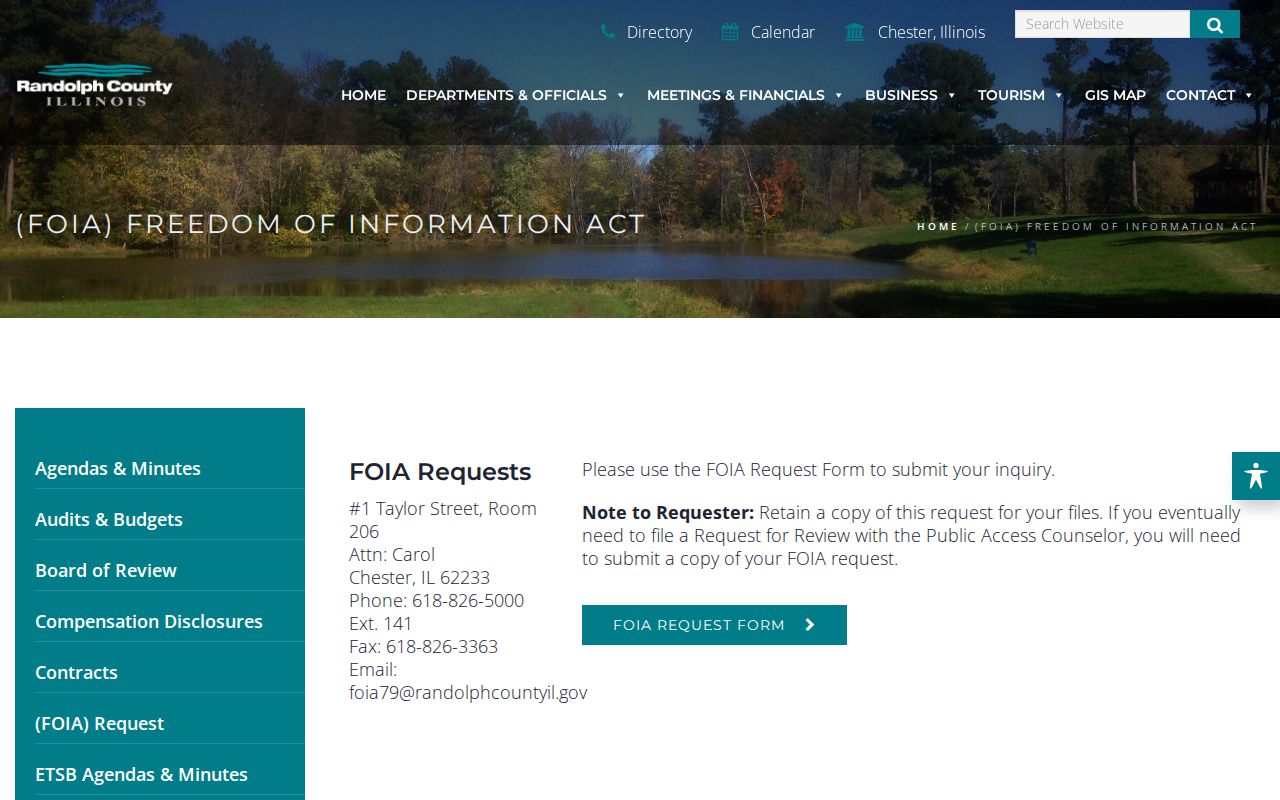
The official Randolph County FOIA page provides the current records route. It identifies a current attention contact and extension that differ from the downloadable PDF, while the shared address, fax, and email are stable. Submit through the current page or shared email and preserve the sent request, response, and access date.
Request terms can include full name and aliases, identifying birth date, booking or admission date, booking number, committing authority, release or transfer date and time, release reason, destination, and a code legend. The form allows email, mail, fax, or in-person delivery and offers paper or electronic formats. No county-specific sheriff fee table was located, so do not assume a charge. Illinois FOIA governs permitted copy fees and waiver rules.
Randolph County FOIA route
Address: 1 Taylor Street, Room 206, Chester, IL 62233
Phone: 618-826-5000, extension 141 on the current page
Fax: 618-826-3363
Email: foia79@randolphcountyil.gov
Listed hours: Monday through Friday, 8 a.m. to 4 p.m.
Classify Randolph County Release Outcomes
A three-day list can be misleading if every removal is placed in one “released” bucket. Randolph County Jail handles ordinary county custody and also houses some federal detainees for the United States Marshals Service. The Sheriff’s 2025 report also documents transports to IDOC and federal transports. Those are movement counts, not release totals, but they show why the destination field matters.
- Released to the community
- The sheriff record states a community release, court-ordered pretrial release, completion, or another non-transfer outcome.
- Transferred to IDOC
- The county jail episode ended, but state institutional custody began or continued. Verify status in the IDOC system.
- Continued federal custody
- A federal detainee left the local roster under USMS authority. A later BOP search may help, but “Not in BOP Custody” is not proof of freedom.
- Parole or MSR
- An IDOC person left prison under state supervision. This is an institutional release, not final discharge.
- Final discharge
- IDOC records show that the sentence and supervision relationship ended.
Illinois VINE can alert on a custody change across contributing systems, but it is not the underlying jail register or court order. For county custody, confirm with the sheriff. For state custody, use IDOC and its historical-record route when a discharged person is absent online. Federal cases require the federal docket, USMS path, and BOP where applicable.
Verify Randolph Three-Day Release Matches
Randolph is also a county name in other states, and search results can surface unrelated release pages from Arkansas or Indiana. Confirm the Illinois government domain, Chester contact details, and agency name before treating any page as local. Never import another county’s release tab because the name looks familiar.
Within the Illinois records, prefer a booking, case, IDOC, or register number. Then compare full name, birth date, facility, charge or sentence context, and the custody dates. A photo resemblance or partial name can start a search but cannot settle identity. Two custody episodes for one person must keep their own admission and release endpoints.
The strongest proof is a dated release or transfer entry from the agency that held the person. A court order strongly establishes legal authority but may precede physical processing. A VINE notice is a useful prompt, while a current locator is a point-in-time status. Cached pages, social posts, and bare roster disappearance are weaker and should not override an official record.